
Southeast Asian Nations Align to Improve Ecotourism Standards and Protect $24.7B Blue Economy
Foundations for Transboundary Partnerships Established as Green Fins Initiative Demonstrates up to 47% Decrease in Environmental Risks to Reefs
BALI, INDONESIA - 17 March 2026 - Following a high-level regional workshop at the Coral Triangle Center in February, 50 delegates from the Philippines, Indonesia, Malaysia, Thailand, Viet Nam, Papua New Guinea and Cambodia are moving to mainstream Green Fins as the gold standard for the region’s marine tourism industry. The workshop aimed to fortify regional capacity and harmonise standards for the scuba diving and snorkeling industries, ensuring that economic growth does not come at the cost of the world’s most biodiverse marine ecosystems.
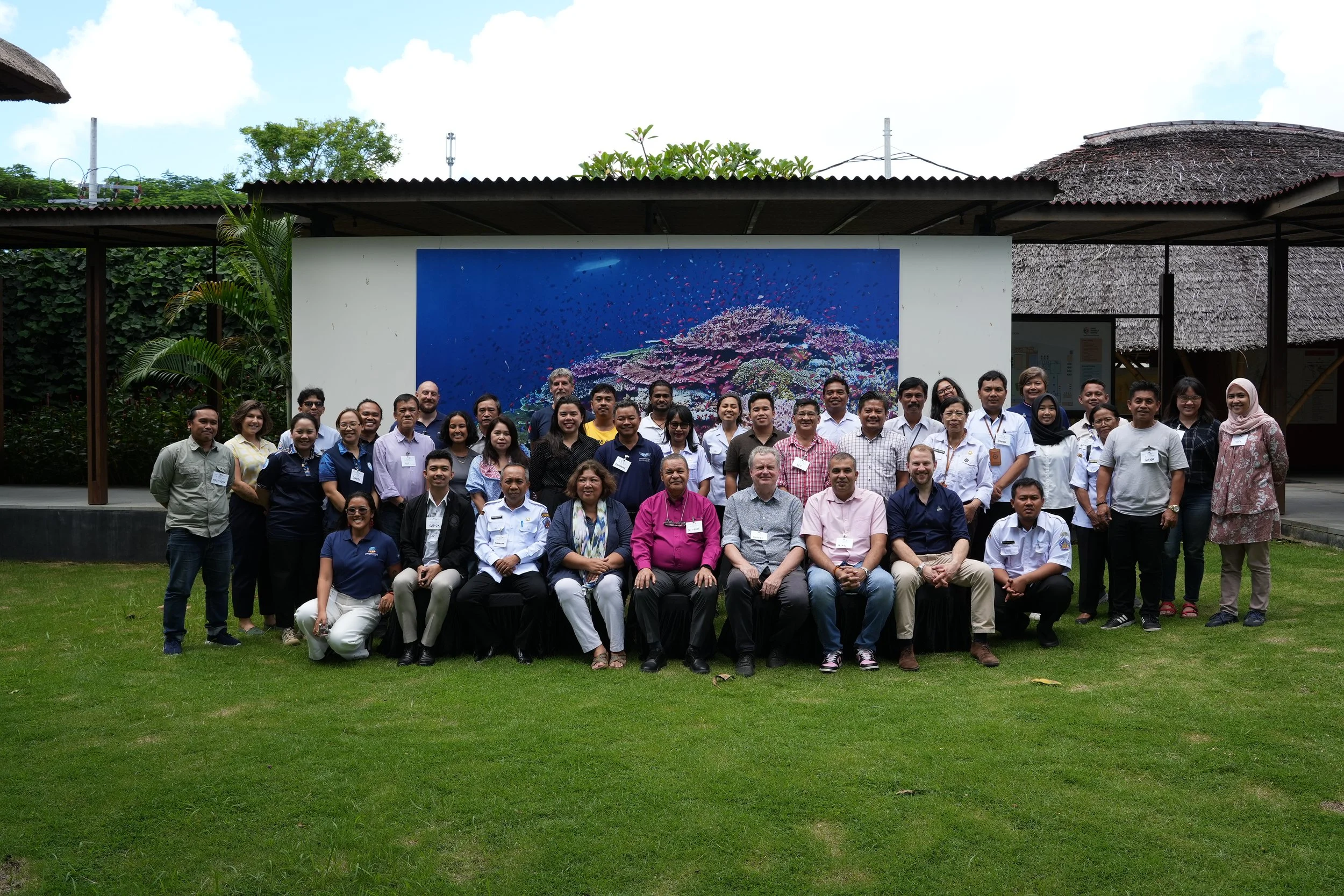
Green Fins Regional Workshop 2026 attendees
A significant milestone of this event was establishing the foundations for transboundary partnerships between diving and snorkelling destinations in the region, beginning with Coron, Philippines, and Bali, Indonesia. This proposed collaboration is built on a framework for regional knowledge-sharing and standardised data collection to mitigate transboundary threats to the reefs such as plastic pollution and direct damage due to poor tourist behaviour.
The workshop with the theme "Fostering a balance between economic development and environmental sustainability with Green Fins for a Blue Economy" is a pivotal component to improve ecotourism standards in the region by The Reef-World Foundation (Reef-World). This work was funded by the Global Environment Facility (GEF) South China Seas Strategic Action Plan (SCS-SAP) Project with support from the United Nations Environment Programme (UNEP) and the United Nations Office for Project Services (UNOPS).
A Shared Responsibility for a US$ 24.7 Billion Asset
The Coral Triangle is the global epicenter of marine life, supporting 76% of all known coral species. This natural capital is both an environmental treasure and an economic powerhouse, generating over US$ 24.7 billion in nature-based tourism and supporting 140 million coastal residents.
Philippine and Indonesian marine environments experience biological and physical transboundary exchange through ocean currents and species migrations as stated in the Sulu-Sulawesi Marine Ecoregion (SSME) Conservation Plan. Countries sharing borders through bodies of water share the transboundary impacts of tourism, such as trash mismanagement, chemical discharge, coral damage and wildlife harassment. This is also true of the flow of tourists, with an estimated 5-8% visiting multiple countries in the Coral Triangle. Marine tourism has demonstrated both positive and negative physical and behavioural impacts,and this workshop successfully identified opportunities for cross-border collaboration through Green Fins to address shared challenges.
Building the Foundations for Transboundary Collaboration
A key focus of the discussions was the potential for a Green Fins “Partner Sites” transboundary agreement between Coron, Philippines, and Bali, Indonesia. While the agreement is currently undergoing review, the workshop has laid out a framework for this pilot model for:
Peer-to-peer learning between two of the world's most iconic dive destinations.
Collaborative data sharing to mitigate transboundary threats like plastic pollution.
Joint management of shared resources, including migratory species.
Proving the Green Fins Model
Beyond the diplomatic efforts, the workshop focused on the "hard data" required to justify policy intervention. Key findings and outcomes included:
Measurable Impact: Data presented confirmed that Green Fins certified operators achieve a 47% reduction in environmental threat scores in Coron. With business retention rates at 77–83%, the programme was validated as both ecologically vital and economically sustainable.
AI and Citizen Science: Presentations from the Wildlife Conservation Society’sMERMAID platform, Reef Check, Marine Megafauna Foundation, and Trash Hero showcased how community-led data collection and developments in AI-powered monitoring are filling critical government gaps in identifying reef health and migration corridors.
Practical Field Validation: Delegates observed Green Fins in action with dive operators Ceningan Divers and All 4 Diving in Nusa Penida Marine Protected Area, specifically learning from best practices such as standardised briefing protocols that prevent reef damage in high-traffic areas.
"We have proven that when you give the industry data-driven tools, the threats to our reefs drop by nearly half," said Dev Albao, Programmes Manager of The Reef-World Foundation. "The 20+ year-old Green Fins initiative remains to be a critical building block. This workshop wasn't just about sharing ideas; it was about building the infrastructure for a sustainable Blue Economy that supports 140 million people across the region."
Securing the Future with Funding and Policy Integration
The workshop addressed the "financing gap" that often stalls regional conservation. The delegates co-developed National and International Roadmaps, creating a unified front to:
Integrate Green Fins standards into formal national regulatory frameworks.
Strengthen financing mechanisms to support regional transboundary threat management.
Ensure long-term institutional buy-in from national ministries in the Philippines and Indonesia.
“The fact that Indonesia and the Philippines are already progressing well with Green Fins means that we can start here, and then expand to other countries within the Coral Triangle Region,” said Anders Poulsen, Senior Project Manager of the SCS-SAP Project. “Given the rapid development of tourism in the region there is an urgent need to ensure that this sector develops sustainably.”